How to Care for Natural Gemstone Carvings: Cleaning and Storage Tips
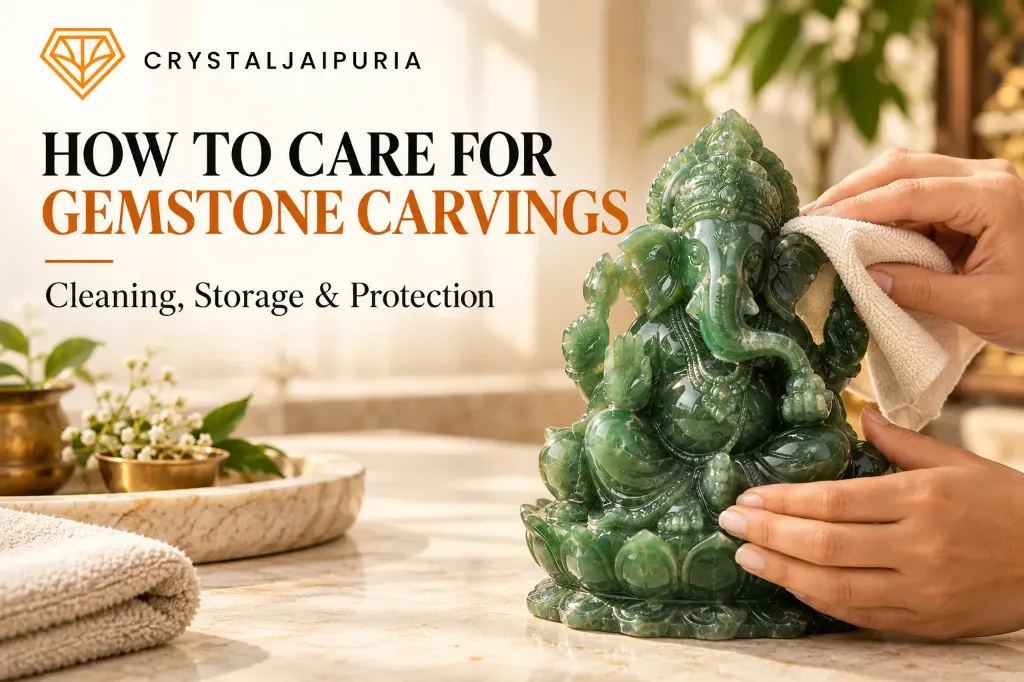
Natural gemstone carvings can retain their breathtaking beauty and radiant energy for generations when handled, cleaned, and stored correctly. The safest approach is simple: identify the stone, use gentle cleaning techniques, and avoid harsh treatments that could damage the surface luster or weaken delicate hand-carved features.
Different gemstones have different physical and chemical properties. A cleaning method perfectly safe for hard Quartz Statues may cause irreparable harm to porous or softer stones like Lapis Lazuli, Malachite, or treated materials.
For most decorative gemstone sculptures and sacred murtis, routine dust removal and mindful handling are far safer and more effective than frequent aggressive chemical cleaning.
✨ Golden Rule of Gemstone Care
Never assume that a cleaning method is safe simply because an object is described as a crystal or gemstone. Always identify the specific mineral and its porosity before introducing moisture or cleaning agents.
1. Identify the Gemstone Before Cleaning
Before undertaking any cleaning routine, confirm the exact mineral identity and any known enhancements:
- Durable Silicates (Mohs 7): Clear Quartz, Sphatik, Amethyst, Rose Quartz, and Agate are relatively non-porous and chemically stable.
- Porous or Softer Minerals (Mohs 5 to 6): Lapis Lazuli (contains calcite/pyrite), Turquoise, and Malachite are sensitive to moisture, acids, and household chemicals.
- Composite or Assembled Carvings: Pieces with glued silver pedestals, gold leaf embellishments, or filled fissures require strictly dry cleaning.
If the stone's identity or treatment is uncertain, begin with dry dusting and consult the manufacturer or a qualified gemologist before using liquids.
2. Remove Dust with a Soft Microfiber Cloth
For regular maintenance, a clean, dry, lint-free microfiber cloth or an ultra-soft goat-hair artist brush is your most dependable tool.
Gently wipe the surface, recessed crevices, and sculptural contours. Never apply heavy pressure against slender projections, outstretched mudra fingers, or fragile crown edges.
Avoid coarse paper towels or household dusters. Common airborne dust contains microscopic quartz particles (Mohs 7); rubbing aggressively with a rough cloth can drag abrasive grit across softer stones, causing dull microscopic scratches over time.
3. When is Water Appropriate for Gemstone Carvings?
Water is suitable for untreated, non-porous minerals like natural Sphatik Quartz and Jade, but it is not a universal solution for all stones.
When cleaning durable stones with water:
- Use a lightly dampened soft cloth rather than submerging the sculpture.
- Gently wipe away surface residue, then dry immediately and thoroughly with a fresh cloth.
- Never use hot water: Thermal shock can cause sudden expansion along internal inclusions, potentially cracking natural crystals.
- Avoid soaking sculptures with joined bases, glued parts, or silver embellishments.
4. Avoid Harsh Chemicals and Household Cleaners
Bleach, ammonia, bathroom cleaners, vinegar, and abrasive scouring powders should never touch a gemstone carving. Acidic compounds attack carbonate minerals (like calcite in Lapis Lazuli) and dissolve high-sheen polish.
Avoid Ultrasonic Cleaners & Steam Cleaners: While commercial jewelry shops use ultrasonic baths for faceted diamonds, high-frequency sound waves can shatter gemstone carvings with natural veil inclusions, fractures, or internal liquid pockets.
5. Protect Carvings from Impacts and Physical Scratches
Gemstones are naturally hard yet inherently brittle. Mineral hardness (Mohs scale) measures scratch resistance, not resistance to shattering when dropped on stone or tile floors.
- Always lift a sculpture with both hands, supporting the solid base and main torso.
- Never lift a statue by delicate limbs, trunks, ornaments, or crowns.
- Place felt or silicone bumper pads beneath heavy sculptures to prevent scratching furniture and eliminate vibrations.
- Keep sculptures away from table edges, active walkways, and curious pets.
6. Choose Suitable Storage Conditions
When a precious carving is not on display, store it in a climate-controlled, dry environment away from drastic temperature fluctuations:
- Wrap each carving individually in acid-free tissue paper or a soft velvet pouch.
- Never let two gemstone carvings touch each other directly in storage; harder crystals will scratch softer ones.
- Protect coloured crystals (such as Amethyst, Rose Quartz, and Fluorite) from prolonged direct ultraviolet sunlight, which can cause gradual photo-bleaching.
7. Caring for Gemstone Carvings Used in Worship (Puja & Abhishek)
Sacred murtis like Sphatik Shivlings and Ganesha statues are frequently used in home temples for abhishek rituals involving water, milk, honey, sandalwood paste, or sacred oils.
Authentic natural Clear Quartz (Sphatik) is inert and safely tolerates ritual liquids. However, if milk or honey is offered:
- Rinse gently with room-temperature clean water immediately following the ritual.
- Dry completely with a soft cloth to prevent sticky organic residues from attracting dust and dulling the crystal's clarity.
- Never perform abhishek on porous stones (like unsealed Lapis Lazuli) with acidic liquids like lemon or curd.
8. Common Gemstone-Care Mistakes to Avoid
9. How Often Should Gemstone Carvings Be Cleaned?
There is no rigid timetable. A decorative sculpture housed inside an enclosed glass vitrine may only need gentle dusting once every few months. An idol handled daily in rituals benefits from a quick wipe after each offering.
If you notice a natural hairline fissure developing or a loose ornament, do not attempt aggressive home glue repairs. Seek guidance from the original lapidary supplier.
Conclusion
Good gemstone care depends on knowing your material and choosing the least aggressive, most respectful cleaning method. Gentle dusting, mindful two-handed handling, stable display conditions and avoidance of harsh chemicals ensure your carvings retain their luster and structural integrity for lifetimes.
When material details are uncertain, consult the artisans or review our comprehensive Gemstone Authenticity Guide. Explore the Crystal Statues Collection to discover naturally durable, certified artisan carvings.
Frequently Asked Questions
1. Can I clean gemstone carvings with water?
It depends on the stone, its treatments and any attached components. Use a damp cloth only when the material is known to tolerate moisture.
2. Can gemstone sculptures be scratched?
Yes. Hardness varies by material, and even hard gemstones can be scratched by harder substances or damaged by abrasive particles.
3. Can I use an ultrasonic cleaner for crystal statues?
Do not assume it is safe. Vibrations may damage stones with fractures, treatments or delicate components.
4. How should I pack a gemstone carving for storage?
Wrap it separately, cushion it securely and prevent movement inside a sturdy box. Heavy or fragile pieces need packaging designed for their weight and shape.
5. Can I use milk or oil on a gemstone idol?
Not all materials tolerate these substances equally. Check the stone's specific care requirements before exposing it to ritual liquids.