A Beginner's Guide to Gemstone Types, Colours, Patterns and Natural Inclusions
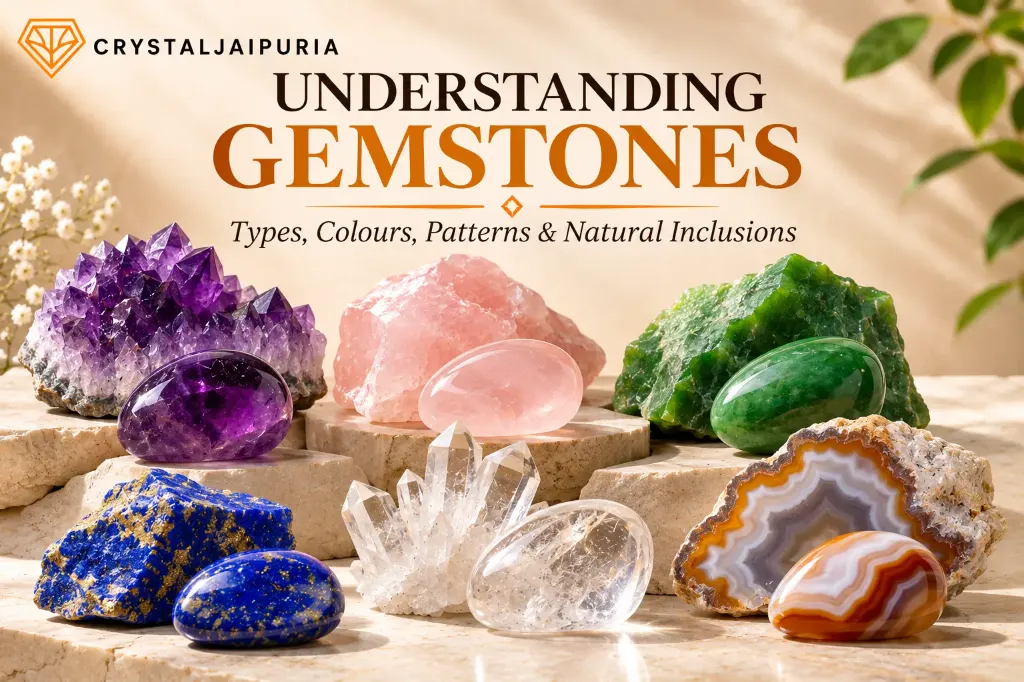
Gemstones are valued worldwide for their mesmerizing colours, natural patterns, unique mineral characteristics, and suitability for sacred sculpture, architectural decor, and fine jewellery. However, even stones belonging to the exact same mineral family rarely appear identical.
A gemstone's visual appearance is fundamentally shaped by its chemical composition, crystal lattice structure, geological formation conditions, and any human treatments it may have received. Understanding gemstone types, colours, and natural inclusions enables collectors, worshipers, and art enthusiasts to evaluate quality, authenticity, and aesthetic value before purchasing a finished gemstone carving.
1. What Are Gemstones?
Gemstones are naturally occurring minerals, mineral aggregates, or organic materials that possess sufficient beauty, durability, and rarity to be prized for ornamental and sculptural use.
The vast majority of gemstones are crystalline minerals—solids with an orderly, repeating internal atomic arrangement (such as quartz, corundum, and beryl). Other prized materials, such as amber, jet, and natural pearls, are of organic origin, formed through biological processes rather than geological crystallization.
Gemstones span a broad optical spectrum from water-clear transparency and soft translucency to rich, velvety opacity. Across millennia, these stones have been sculpted into sacred deity idols, temple lingams, talismans, and heirloom jewellery. Classic examples revered in Indian lapidary traditions include clear quartz (Sphatik), amethyst, green jade, lapis lazuli, agate, ruby, emerald, and sapphire.
2. Understanding Common Gemstone Types
Different gemstone varieties possess distinct chemical formulas, physical hardness, and internal optical phenomena. Below are the primary varieties most frequently encountered in master lapidary carvings and decorative art:
Clear Quartz (Sphatik)
SiO₂ • Mohs 7Clear quartz is a transparent to translucent crystalline variety of silicon dioxide. Revered in India as sacred Sphatik, it is colourless and displays remarkable optical clarity, often exhibiting natural internal veil fractures, rainbow reflections, or rutile needles.
Rose Quartz
Pink Quartz Variety • Mohs 7Rose quartz is celebrated for its delicate, calming pink hue ranging from pale blush to deep rose tones. The colour is typically attributed to microscopic inclusions of fibrous dumortierite-like borosilicate minerals within the quartz matrix. Most rose quartz specimens exhibit a soft, cloudy translucency rather than complete transparency.
Amethyst
Purple Quartz Variety • Mohs 7Amethyst is the purple variety of quartz, prized since antiquity for royal ornamentation. Its majestic purple hue—ranging from soft lilac to deep imperial violet—results from trace ferric iron (Fe³⁺) impurities irradiated by natural geological gamma rays. Natural amethyst frequently displays distinct colour zoning across crystal growth pyramids.
Green Jade (Nephrite & Jadeite)
Amphibole / Pyroxene • Mohs 6 – 6.5"Jade" encompasses two distinct mineral species: nephrite (an amphibole mineral renowned for interlocking fibrous toughness) and jadeite (a pyroxene mineral possessing vivid emerald-green coloration and higher hardness). Both stones occur in rich green tones and greasy-to-vitreous lusters. Discerning buyers should always confirm whether a piece is nephrite or jadeite.
Lapis Lazuli
Metamorphic Rock • Mohs 5 – 5.5Lapis lazuli is a metamorphic rock prized for its deep celestial blue color, primarily composed of the mineral lazurite. High-grade Afghan and Badakhshan lapis features sparkling golden specks of pyrite (fool's gold) and white swirls of calcite, giving each hand-carved piece the appearance of a starry night sky.
Agate (Banded Chalcedony)
Microcrystalline SiO₂ • Mohs 6.5 – 7Agate is a banded variety of chalcedony—a microcrystalline form of quartz formed in volcanic cavities. It displays rhythmic, concentric bands and layers of varying translucency in earth tones, warm ambers, whites, and greys. These organic bands make every sculpted piece completely unique.
| Gemstone | Mineral Family | Hardness | Typical Colours | Signature Features |
|---|---|---|---|---|
| Clear Quartz | Crystalline Quartz | 7 Mohs | Water-clear, colourless | Natural veils, rainbow reflections |
| Rose Quartz | Crystalline Quartz | 7 Mohs | Blush pink to deep rose | Dumortierite fibers, soft cloudiness |
| Amethyst | Crystalline Quartz | 7 Mohs | Lilac to royal violet | Iron colour centres, chevron zoning |
| Green Jade | Nephrite / Jadeite | 6 – 6.5 Mohs | Mutton-fat, olive, emerald | Fibrous toughness, greasy luster |
| Lapis Lazuli | Metamorphic Rock | 5 – 5.5 Mohs | Deep azure & royal blue | Golden pyrite flecks, calcite clouds |
| Agate | Banded Chalcedony | 6.5 – 7 Mohs | Multicolour earth tones | Concentric bands, geode cavities |
3. Why Do Gemstones Have Different Colours?
The extraordinary palette of gemstones is created by complex interactions between light, chemical elements, and crystal physics. Gemstone coloration is driven by four primary mechanisms:
- Trace Element Impurities (Allochromatic): Pure mineral crystals are often colourless. When tiny percentages of transition metal ions (such as iron, chromium, titanium, vanadium, or manganese) substitute for native elements in the crystal lattice, they absorb specific wavelengths of light. For example, trace chromium yields the intense green of emerald and the vivid red of ruby.
- Inherent Chemistry (Idiochromatic): In some stones, colour-causing elements are an essential part of the chemical formula. Malachite is always green due to copper, and peridot is olive-green due to its essential iron content.
- Colour Centres & Natural Irradiation: Radiation from surrounding rocks can dislodge electrons in the crystal lattice, creating "colour centres" that absorb light. Amethyst's purple hue is formed when natural gamma radiation interacts with trace iron in quartz.
- Structural Interference: Optical phenomena such as labradorescence in labradorite, play-of-colour in opal, and adularescence in moonstone arise from light scattering off microscopic internal layers and sphere lattices.
In fine decorative carvings, colour distribution is paramount. A single rough gemstone may exhibit dramatic colour zoning. Master artisans in Jaipur carefully study this natural zoning before sculpting, positioning darker zones in the base or drapery and keeping the deity's facial features in serene, translucent tones.
4. What Are Natural Gemstone Inclusions?
Natural inclusions are solid minerals, fluid cavities, or structural anomalies enclosed within a gemstone during its geological crystallization millions of years ago deep within the Earth's crust.
Common types of natural inclusions include:
Solid Mineral Inclusions
Pre-existing or concurrent crystals trapped inside, such as golden pyrite crystals in lapis lazuli, dark tourmaline rods, or golden rutile needles in rutilated quartz.
Fluid & Multiphase Cavities
Microscopic negative cavities containing liquid, a moving gas bubble, and sometimes a tiny mineral crystal—representing the primordial mineral fluid from which the gemstone crystallized.
Healed Fissures & "Veils"
Delicate, feather-like planes where ancient fractures healed during geological growth, reflecting iridescent rainbow fringes when viewed under directional light.
Growth Zoning & Phantom Planes
Outlines of earlier crystal growth stages ("phantom crystals") preserved as chemistry or temperature changed during millions of years of formation.
To professional gemologists, inclusions serve as indelible geological birthmarks. They provide indispensable diagnostic evidence distinguishing natural earth-mined gemstones from synthetic lab-grown alternatives and factory-melted glass imitations.
5. Are Gemstone Inclusions Defects?
Not necessarily. In the world of natural gemstones and Vedic carvings, inclusions are celebrated as nature's authentic signature.
Whether an inclusion affects a gemstone depends on its size, location, and structural impact. It is crucial to distinguish between three very different phenomena:
- Natural Inclusions: Inherent mineral features formed geologically. In many stones—such as the pyrite flecks in lapis lazuli or silk in star sapphires—they are essential to the stone's beauty and identity.
- Mechanical Damage: Chips, open fractures, or scratches sustained during mining, cutting, or transport. Open surface fissures that threaten structural integrity during pooja rituals or handling are genuine defects.
- Human Treatments: Artificial processes such as dye injection, lead-glass fracture filling, or resin impregnation designed to conceal fractures or simulate higher clarity.
6. Understanding Gemstone Patterns
Natural geological events create breathtaking visual patterns that ensure no two hand-carved gemstones ever look alike:
- Concentric Banding: Repeated rhythmic layers deposited sequentially in cavity walls, creating the mesmerizing concentric rings of agate and onyx.
- Colour Zoning: Dramatic geometric colour variations along crystal growth faces, as seen in bi-colour tourmalines and chevron amethyst.
- Brecciation & Veining: Interlocking fragmented rock masses re-cemented by quartz or calcite, creating the dramatic cobweb patterns in turquoise and lapis lazuli.
- Mottling & Cloudiness: Soft, cloud-like patches of varying translucency created by microscopic mineral dispersions in rose quartz and nephrite jade.
- Dendritic Formations: Fern-like manganese oxide or iron silicate tree patterns crystallizing in micro-fractures, characteristic of scenic dendritic agate.
7. How Do Gemstones Get Their Natural Appearance?
Every natural gemstone is a tangible testament to geological deep time, originating from one of four major formation environments:
- Igneous / Magmatic: Crystallizing slowly from molten rock as magma cools deep within the Earth or in fluid-rich pegmatite veins, forming massive quartz crystals, tourmaline, and feldspars.
- Hydrothermal: Formed when superheated, mineral-saturated water circulates through deep fissures and tectonic faults. As temperature and pressure drop, minerals crystallize along cavity walls (e.g., amethyst geodes and quartz veins).
- Metamorphic: Intense heat and tectonic pressure recrystallize existing minerals without melting, giving birth to lapis lazuli, ruby, and jadeite.
- Sedimentary: Weathering, mineral precipitation, and fossilization across millions of years, producing banded agates and opals.
8. How Should Beginners Evaluate Gemstones?
You do not need a complete gemological laboratory to make smart, confident purchasing decisions. Use this practical 7-point evaluation framework:
9. Why Do Gemstone Characteristics Matter in Carvings?
Sculpting a deity statue or decorative masterpiece from natural rough crystal is fundamentally different from casting synthetic resin or carving soft wood. A master lapidary must read the stone's grain before making a single cut.
Cleavage planes, crystal orientation, and internal fracture lines dictate where delicate details—such as Lord Ganesha's trunk, Goddess Saraswati's veena, or Lord Shiva's trishul—can be safely sculpted. Rather than fighting natural colour zoning or inclusions, master lapidary artisans in Jaipur incorporate the stone's innate features into the final divine form.
Explore Handcrafted Natural Gemstone Idols & Sculptures
At Crystal Jaipuria, every statue is hand-sculpted in Jaipur by master generational artisans from 100% natural, certified rough crystals. Explore our specialized collections to examine individual carving specifications, weights, and verifiable lab certifications:
Conclusion
Gemstones are geological masterpieces, each bearing the unique visual signature of its elemental chemistry, crystal lattice, and millions of years of subterranean formation. By understanding gemstone types, vibrant colour mechanisms, natural inclusion patterns, and proper evaluation standards, you can appreciate the true artistry of natural crystal carvings.
When acquiring gemstone sculptures for worship, meditation sanctums, or architectural collections, prioritize accurate mineral identification, exquisite lapidary craftsmanship, and verifiable authenticity documentation.
Frequently Asked Questions
1. What are the most common types of gemstones?
Common examples include quartz varieties (clear quartz, amethyst, rose quartz, agate), metamorphic rocks like lapis lazuli, jade (jadeite and nephrite), and precious gems such as sapphire and emerald.
2. Why do natural gemstones have different colours?
Colour depends on crystal chemical composition, transition metal trace elements (such as iron, chromium, or manganese), natural irradiation, structural lattice distortions, and geological formation conditions. Thermal or chemical treatments can also modify a gemstone's appearance.
3. What are inclusions in gemstones?
Inclusions are internal structural features formed during geological crystallization, such as mineral crystals (rutile, pyrite), multiphase fluid cavities, growth zoning, internal fractures, and veil lines.
4. Are inclusions always a sign of natural gemstones?
No. Inclusions can also occur in synthetic lab-grown materials (such as flux remnants or seed plates), and some natural gems can be exceptionally clean. Visual features alone cannot establish a gemstone's origin; gemological testing is recommended.
5. What is the difference between jadeite and nephrite?
Both minerals are commercially called jade, but they are mineralogically distinct. Nephrite is a calcium-magnesium-iron amphibole silicate renowned for fibrous toughness, while jadeite is a sodium-aluminum pyroxene with higher hardness, vibrant emerald tones, and greater translucency.
6. Do natural gemstone carvings have identical patterns?
No. Earth-mined rough stones possess organic variations in banding, veiling, colour zoning, and inclusions, making each hand-sculpted gemstone carving completely unique in appearance.